
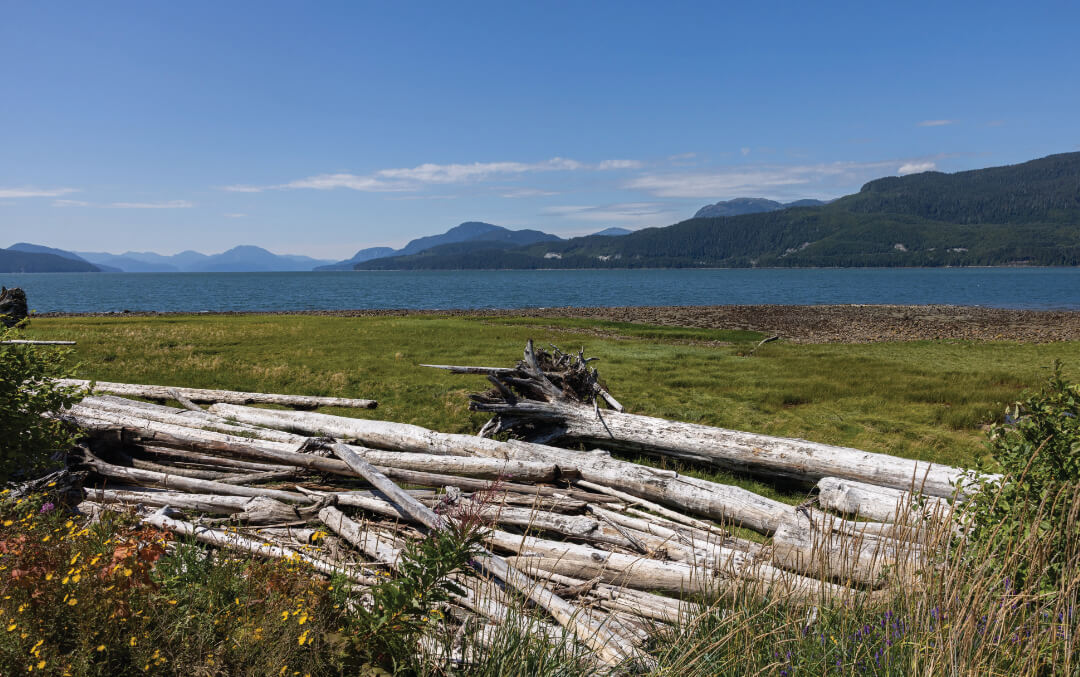
On the Douglas Channel near Kitimat, cedar-lined shores meet deep coastal waters where the Haisla Nation has lived, travelled and governed for generations.
Today, a floating industrial structure is taking shape along this coast. The Haisla Nation, in partnership with Pembina Pipeline Corporation, is building Cedar LNG, balancing economic development with environmental stewardship.
“Together with our partner Pembina Pipeline, we are setting a new standard for responsible and sustainable energy development that protects the environment and our traditional way of life,” says Crystal Smith, former chief councillor of the Haisla Nation.
Cedar LNG is the first project of its kind in the world: a majority Indigenous-owned liquefied natural gas export facility. It is also one of the largest Indigenous-owned infrastructure projects in the country.
“Our vision for Cedar LNG was always predicated on being able to source the cleanest power option to ensure our project delivers LNG with the lowest possible carbon footprint,” says Chief Councillor Maureen Nyce of the Haisla Nation.
That vision is supported through a $200-million provincial contribution to help electrify the project and connect it to B.C.’s hydroelectric grid.
“We are grateful to the provincial government for supporting our Nation’s goal of sustainably advancing development in our territory on our own terms and in accordance with our values,” says Nyce. “When Indigenous communities lead projects as owners, as is the case with Cedar LNG, we are able to ensure that these projects are developed in the most environmentally responsible manner, while generating revenues that enable us to protect our way of life and build long-term prosperity.”
Cedar LNG is expected to be operational in 2028 and to export approximately three million tonnes of LNG per year. At peak construction, it will employ up to 500 people, with approximately 100 long-term jobs once operational.
“We are setting a new standard for responsible and sustainable energy development that protects the environment and our traditional way of life.”
As construction continues along the Douglas Channel, Cedar LNG reflects a broader shift in how projects are built in British Columbia: with First Nations leading as owners and decision-makers on their territories.