
How are we working together?
The Ministry of Health (HLTH), Health Services Integration Division (HSID) conducts regular and collaborative partner meetings with First Nations Health Authority (FNHA) to support the ongoing implementation of the 14 approved First Nations-led Primary Care Centres (FNPCCs).HSID is also working closely with FNHA to progress the ongoing service plan review of the one remaining FNPCC and support its early implementation. The First Nations-led Primary Care Initiative (FNPCI) is improving access to multi-disciplinary team-based care, including traditional wellness and mental health supports, closer to home by including mobile and virtual service delivery. FNHA conducted a rapid formative evaluation of FNPCI to gather evidence and key learnings, which included engagement with HLTH and FNPCC partners.
Qualitative feedback from First Nations, Métis and Inuit partners on Indigenous cultural safety and humility activities, learning and engagement is sought in Primary Care Networks (PCNs) and FNPCCs planning and implementation activities as appropriate to the local context. Additional indicators regarding progress and outcomes as led and determined by Indigenous communities and organizations are to be decided. The provision of physician services is created through locum work within First Nations communities. Local community PCNs are engaging with First Nations and Indigenous health-serving organizations in service plan development and implementation. There are Indigenous representatives/ representation within PCNs governance structures, including at planning and steering committee tables. Representatives from each community are members of the PCN Planning and Steering Committees and are active in PCN governance. The planning and actioning recommendations of items result from engagement with Indigenous Peoples.
Are there challenges?
PCNs and FNPCCs have experienced service planning and implementation delays due to the health human resource shortages and related recruitment challenges across the province that significantly impact progress in regions throughout B.C. Increasing patient attachment gaps are also commonly outpacing physician and nurse practitioner recruitment in First Nations, Indigenous, rural and remote communities. Primary care parameters or compensation models are not always a good fit for relational care needs in communities. PCNs and FNPCCs have experienced challenges with capital planning as many sites require additional space and facilities to provide healthcare services to the communities in their respective regions throughout B.C.
Highlights
A key highlight was the 2026 opening of the Éyameth’ Health Centre by Sts’ailes First Nation – the Fraser Salish region’s first Indigenous-led health centre – offering expanded access to care including traditional Indigenous wellness services alongside western modalities of care. Services are open to all Indigenous and non-Indigenous people in the North Fraser Region.
There are 97 of 104 PCNs launched (93 percent).There are 15 FNPCCs planned for implementation, with 10 FNPCCs having sites open and delivering primary care with a family physician or nurse practitioner recruited.
These FNPCCs include All Nations Healing House, Northern Nations Wellness Centre, Wilp D’mootxw – Nec’a Yikh (The Healing House), Lu’ma Medical Centre, Kwakwaka’wakw, Coast Salish, Fraser South Wellness Centre, Fraser West, Éyameth’ Health Centre and northern St’át’imc Primary Care Centre. Although Fraser South Wellness Centre is open, it is the only FNPCC with the service plan currently undergoing review, with approved services subject to change. As of December 2025, these FNPCCs have had 26,599 patient visits and 3,601 net new patient attachments in the current fiscal year.
As of December 2025, there are 98.73 full-time equivalents (FTEs) recruited in FNPCCs, with recruitment ongoing for those sites currently approved and in early implementation.
Previous years’ progress
Highlights
Qualitative feedback from First Nations, Métis and Inuit partners on Indigenous cultural safety and humility, learning, and engagement will be gathered through Primary Care Networks and First Nations-led Primary Care Centres. They will be incorporated into planning and implementation activities in ways that reflect the unique context of each local community.
Additional indicators regarding progress and outcomes as led and determined by Indigenous communities and organizations still need to be decided. The provision of physician services is created through locum work within First Nations communities. Furthermore, local community Primary Care Networks are engaging with First Nations and Indigenous health-serving organizations in service plan development and implementation. There are Indigenous representatives/representation within Primary Care Networks governance structures, including at planning and steering committee tables.
Representatives from each community are members of the Primary Care Network Planning and Steering Committees and are active in the Primary Care Network governance. In some cases, they serve as committee co-chairs. The planning and actioning recommendations of items result from engagement with Indigenous Peoples.
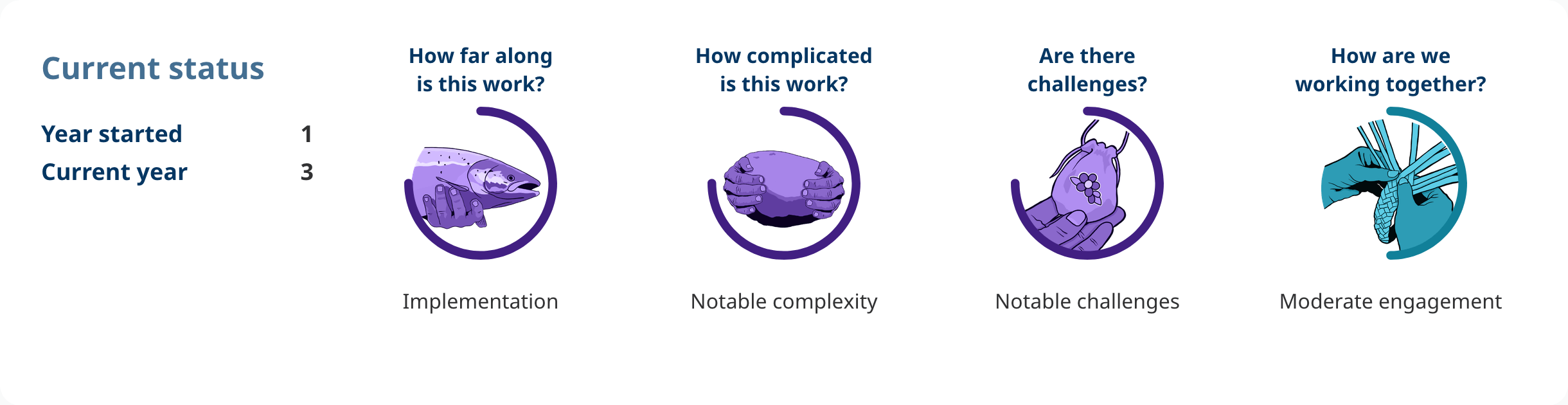
At the time of this report, there are 91 of 103 Primary Care Networks launched (88%) in B.C. There are 14 out of 15 First Nations-led Primary Care Centres approved, with three in operation providing services (All Nations Healing House, Lu’ma Medical Centre and Northern Nations Wellness Centre) and 11 in implementation (northern St’át’imc, Nlaka’pamux, Nuxalk & Ulkatcho, Fraser West, es zúmin’, Gitxsan & Wet’suwet’en Primary Care Centre, Dadzi Wellness Centre, Nuu-chah-nulth, Coast Salish, Éyameth’ Health Centre and Kwakwaka’wakw), and one in the service plan approval process (Fraser South).
Lu’ma Medical Centre, All Nations Healing House and Northern Nations Wellness Centre had 16,358 patient visits and 483 net-new attachments in the current fiscal year (between April 1, 2024, to December 31, 2024). Fourteen out of 15 approved First Nations-led Primary Care Centres aim to attach 26,950 new patients, with Fraser South planning to have an attachment target of an additional 3,200 patients.
According to the fiscal year 2024 and 2025 Primary Care Workforce Report current to January 2, 2025:
- 71.62/175.55 Full Time Equivalent (FTE) (41%) Indigenous Health resources (e.g., Elders and traditional wellness supports) recruited throughout all models of care (Primary Care Networks, First Nations-led Primary Care Centres, CHCs, NPPCCs, and UPCCs), supporting culturally safe team-based primary care delivery.
- 34.30/49.98 FTE (69%) recruited in three First Nations-led Primary Care Centres that are in operation.
- 60.20/245.04 FTE (25%) recruited overall in the 14 First Nations-led Primary Care Centres approved.
How are we working together?
The Ministry of Health is actively collaborating with the First Nations Health Authority (FNHA), who leads engagement efforts through close collaboration with local planning communities composed of First Nations health directors across the province. These committees are crucial in ensuring the planning and implementation of the Primary Care Networks and First Nations-led Primary Care Initiatives are culturally appropriate and aligned to the needs of Indigenous communities. Métis Nation BC and its Métis Chartered Communities are participating in some Primary Care Networks on Vancouver Island, with support of the Ministry of Health as part of the Indigenous Refresh strategy.
Are there challenges?
Primary Care Networks and First Nations-led Primary Care Centres have experienced service planning and implementation delays due to the health human resource shortages that significantly impacts progress in improving health care in regions throughout the province.
Additionally, increasing patient attachment gaps are commonly outpacing physician and nurse practitioner recruitment in Indigenous, rural and remote communities. Primary Care Networks and First Nations-led Primary Care Centres have experienced challenges with space planning as many sites require additional space and facilities to provide health care services to the communities in their respective regions.
There are also obstacles related to physician compensation and the requirement to provide full scope family practice in rural and remote communities. The Health Sector Workforce and Beneficiary Services Division and the Primary Care Division are working closely with the communities and regional health authorities to review practice category and direction moving forward to mitigate clinic closures.
Highlights
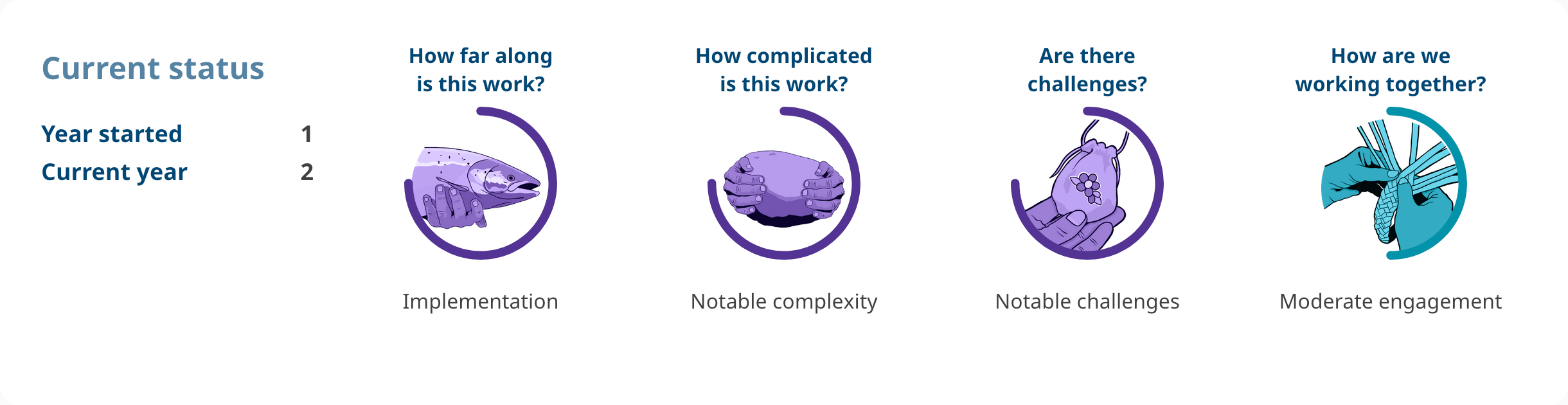
The Ministry of Health is advancing the planning and implementation of Primary Care Networks (PCNs) and First Nations-led Primary Care Centres (FNPCCs) across the province, involving First Nations and Métis partnerships that are reflective of the local communities and regions they will serve. As of March 2024, 79 of 103 planned PCNs have launched (77%) and eight of 15 FNPCCs are approved or in approval (53%).
The ministry worked with First Nations and Métis partners to collect feedback on the planning and implementation of cultural safety and humility activities and learning occurring in PCNs and FNPCCs. Indigenous-led and determined indicators of progress and outcomes will be developed moving forward. Provision of physician services through locum work within First Nations communities is also progressing, as is work to ensure that First Nations and Métis representatives are included within PCN governance structures and at planning and steering committee tables.
Eight FNPCCs have been approved; three FNPCCs (Lu’ma Medical Centre, All Nations Healing House and, most recently, Éyameth) are already active, and the other five (Fraser West, Gitxsan and Wet’suwet’en, Northern Nations Wellness Centre, Nuu-chah-nulth, Dak’elh, and Fraser West) are planned for phased opening in 2024/2025. The Lu’ma and All Nations Healing House FNPCCs had 15,067 patient visits in FY2023/24.
Local community PCNs are engaging with First Nations and Métis health-serving organizations in service plan development and implementation. Representatives from each are part of the PCN planning and steering committees and are active in PCN governance, including serving as committee co-chairs.
As of January 2024, the Ministry of Health committed $7.3 million in annualized funding for 71.5 full-time equivalent (FTE) Elders and traditional wellness supports for First Nations communities. These FTEs are based in PCNs or at Community Health Centres (CHCs), and 38.8 of the 71.5 FTEs have been hired and are supporting culturally safe team-based primary care delivery.
A total of 121.65 team-based care FTEs (82.5 FTEs funded by the Ministry of Health and 39.15 FTEs funded by FNHA) has been committed to the First Nations-led Primary Care Initiative (FNPCI). Once operationalized, they will serve up to 14,950 new patients across all approved FNPCCs.
As of January 2024, the three active FNPCCs (Lu’ma, All Nations Healing House, and Éyameth) have recruited 26.1 out of 39.5 planned FTEs (66%).
How are we working together?
FNPCCs are created in partnership between the Ministry of Health, First Nations Health Authority (FNHA) and local First Nations to provide culturally safe care to First Nations people living in B.C. For the guidelines and protocols advisory committee, a permanent committee representative from the Chief Medical Office at the FNHA was added in 2020.
In response to the In Plain Sight report, the Ministry and FNHA collectively established a provincial working group on Indigenous cultural safety and humility in primary and community care, with Indigenous and non-Indigenous members representing clinical committees, professional practice organizations, regional health authorities and Indigenous health and wellness organizations.
The cultural safety and humility standard implementation plan outlines four pillars through which the standard will be operationalized in the ministry including (a) shared accountability, (b) portfolio management, (c) change management and (d) budget and resource management. A robust implementation plan will enable successful and accountable delivery of objectives and key results (OKRs). OKRs help identify, measure and achieve culturally safe systems and services that better respond to the health and wellness priorities of First Nations, Métis and Inuit and their communities regardless of where they are located.
Are there challenges?
PCNs and FNPCCs have experienced service planning delays due to health human resource shortages across the province, significantly impacting progress in some regions. Additionally, growing patient attachment gaps are commonly outpacing physician and nurse practitioner recruitment in First Nations communities.
PCNs and FNPCCs have experienced risks due to the limited availability of capital funding. This impacts progress of regional service planning as they look for space and facilities to provide health services to the communities.
Obstacles to progress on PCN and FNPCC implementation relate to physician compensation issues and PCN governance structures. Actions are being taken to address these issues through the Ministry of Health’s health sector workforce and beneficiary services division and the primary care division, which are working with impacted communities, refreshed primary care strategy compensation models, and a refreshed approach to restructuring PCN governance.

Highlights
On October 11, 2022, the Dakelh Dene, Tŝilhqot’in and Secwépemc Nations, in collaboration with the First Nations Health Authority (FNHA), opened the Williams Lake First Nations Wellness Centre and 1,300 new Indigenous patients are able to access longitudinal primary care in a culturally safe team-based care setting. On March 17, 2023, a ground-breaking and traditional ceremony was held for the new Sts’ailes Community Care Campus (SCCC), in Harrison Mills, B.C. The SCCC will be the third First Nations-Led Primary Health Care Centre (FNPCC) to launch in the province and, once fully operational, will provide 1,400 new Indigenous patients with longitudinal primary care. Progress continues to be made on moving the remaining 13 FNPCCs into implementation across the province, with nine centres planned to open in 2024.
Local community Primary Care Networks (PCNs) are engaging with First Nations and Indigenous health serving organizations in service plan development and implementation. Representatives from each are members of Primary Care Network Planning and Steering Committees, and are active in PCN governance, and in some cases, are serving as committee co-chairs. In Primary Care Network Service Plans to-date, 149.2 full-time equivalents (FTEs) have been approved to directly support Indigenous Peoples. Of these, 49.2 FTEs are Elders, Traditional Healers, Knowledge Keepers and Aboriginal Patient Navigators who will be included on local primary care teams.
Indicators
- Implementation project underway: Planning and implementation status is underway of PCNs and FNPCCs across the province involving First Nations, Inuit and Métis partnerships as appropriate to the local community context; at the time of this reporting, 63 of 99 PCNs are launched (64%) and 6 of 15 FNPCCs are approved or in approval (40%).
How are we working together?
FNPCCs are created in partnership with the FNHA and local First Nations to provide culturally safe care to Indigenous Peoples living in B.C. For the Guidelines and Protocols Advisory Committee, a permanent committee representative from the Chief Medical Office at the FNHA was added in 2020. In response to In Plain Sight, the Ministry of Health and the FNHA collectively established a provincial working group on Indigenous Cultural Safety and Humility in Primary and Community Care, with Indigenous and non-Indigenous members representing clinical committees, professional practice organizations, regional health authorities and Indigenous health and wellness organizations.
Are there challenges?
PCNs and FNPCCs have experienced service planning delays due to community capacity constraints and COVID-19 challenges. Health human resource shortages across the province are also significantly impacting progress in some regions. Additionally, growing patient attachment gaps are commonly outpacing physician and nurse practitioner recruitment in Indigenous, rural and remote communities.
Obstacles to PCNs and FNPCCs implementation progress relate to physician compensation issues and PCN governance structures. Actions are being taken to address these issues through the new Physician Master Agreement, refreshed Primary Care Strategy compensation models and the Ministry of Health’s restructuring of PCN governance requirements.