
How are we working together?
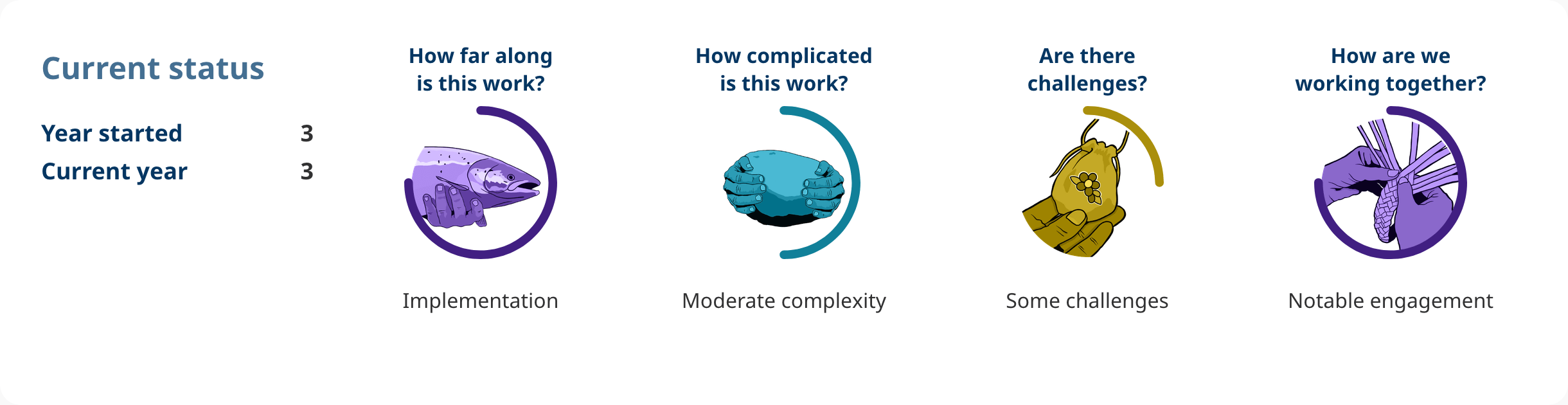
The Province and Indigenous partners continue to work together to protect nature, including advancing work on biodiversity conservation, habitat restoration, recovery planning for species at risk and wildlife stewardship. This work is complex and can take time. The Tripartite Framework Agreement on Nature Conservation was negotiated among the members of the First Nations Leadership Council (FNLC), Environment and Climate Change Canada and the Province of B.C. This agreement guides work together through the Tripartite Implementation Committee, its Secretariat and three subcommittees. These groups meet regularly to plan work, check progress and prepare an annual report. They also make sure the shared principles all partners agreed to are followed. Together for Wildlife is the B.C. government’s strategy to improve wildlife and habitat stewardship throughout the province. Goal 5 of Together for Wildlife focuses on First Nations and the B.C. government working together on wildlife stewardship. The First Nations – B.C. Wildlife and Habitat Forum is a non-representative technical advisory group that guides Together for Wildlife’s implementation. The forum provides advice on policies, procedures, communications and long-term planning that support shared stewardship of wildlife and habitat.
Are there challenges?
There are many pressures on the land. Industrial activities, community needs and the impacts of climate change all affect ecosystems. These pressures can lead to declining habitat and fewer traditional food sources for Indigenous communities. One challenge in meeting these pressures is the time it takes to advance conservation protections. Many conservation projects need agreement from First Nations, local communities, industry and other groups, and aligning various interests can be complex and progress can be slow. New and unexpected risks can also shift priorities quickly. For example, the appearance of Chronic Wasting Disease in B.C. created an urgent need to respond to help protect cervid populations, particularly deer, which required staff and partners to change focus on short notice.
Across all levels of government and in many communities, there is strong agreement that biodiversity loss and climate change are urgent issues. Addressing them requires strong relationships, early collaboration, clear communication and adequate resources—areas where the Province and partners continue to make steady progress.
The First Nation Forum members have contributed considerable effort to collaborate and provide advice rooted in experience, Indigenous knowledge and a commitment to shared goals. Provincial action and uptake on the guidance and advice of the Forum have occurred at a slow pace which has delayed outcomes.
Highlights
This year, there were several important achievements in the collaborative work to support conservation and strengthen partnerships between the Province and First Nations.
One major success was the creation of a new Wildlife Management Area on the north coast, covering KishKosh and Kitkiata inlets. This designation was made possible through close collaboration with Gitga’at First Nation and Gitxaala Nation.
The Ministry of Water, Land and Resource Stewardship, with partners also supported preparation for the Squamish Land and Resource Management Plan to help advance new conservation protections. In the Okanagan and East Kootenay, the Province and First Nations worked together to map, plan and test possible ecological corridors and wildlife crossings along major highways and railways. These projects help improve safe movement for wildlife and protect important habitats.
Federal funding was leveraged to help the Nature Conservancy of Canada purchase 45,000 hectares of conservation lands near Fernie, as well as to support the Regional District of Nanaimo’s purchase of Hamilton Marsh. First Nations led work on wildlife monitoring in the North Cascades and identifying barriers to animal movement in the East Kootenay with support from the provincial government.
The Tripartite Framework Agreement on Nature Conservation includes a commitment to report annually on accomplishments. Under the Tripartite Framework Agreement on Nature Conservation, The Province, federal government and First Nations continued to report on shared accomplishments as work continues toward the agreement’s goals through to 2030.
Previous years’ progress
Highlights
The Draft Biodiversity and Ecosystem Health Framework was developed collaboratively with First Nations government-to-government tables, leadership organizations and forums, from concept to actions. The Framework reflects a collaboratively built vision for healthy environments, communities and economies. Once finalized, it will identify mechanisms to set clear objectives and facilitate the necessary legislative tools and policies to improve the work we do together to achieve this vision — across various levels of governments and with industry, non-governmental organizations and communities.
The Together for Wildlife Strategy’s goal #5 is focused on ensuring that collaborative stewardship advances reconciliation with First Nation governments. In co-developing this strategy, the First Nations-B.C. Wildlife Stewardship and Habitat Conservation Forum was formed. The parties worked together to implement the Strategy by co-developing policies and procedures, as well as deciding which actions to prioritize. A significant project that is currently underway is a full review of the Wildlife Act.
The Tripartite Framework Agreement on Nature Conservation was signed by the Canadian government, the B.C. government and the First Nations Leadership Council on November 30, 2023. This agreement identifies goals and objectives that are shared priorities among these parties. Advancing the agreement’s actions, in partnership with First Nations rights and title holders, supports a more inclusive approach to nature conservation across multiple levels of government. It helps address threats to biodiversity and the restoration and recovery of species and ecosystems in B.C., while advancing reconciliation and coordinating funding to support this important work.
How are we working together?
The Province is advancing several interconnected initiatives to achieve a shared vision of ecosystem health, community well-being and economic resilience, including its commitment to co-management with First Nations. This ongoing work supports the conservation of biodiversity, wildlife and habitats, and the restoration and recovery of priority ecosystems and species at risk. These initiatives advance the commitment to the continued development of co-management structures and changes to decision-making practices so they align with commitments made through the Declaration Act.
Are there challenges?
Ongoing challenges associated with advancing the Biodiversity and Ecosystem Health Framework include the pressure on respondents’ capacity to engage due to multiple engagement requests and differing levels of capacity, which impact participation and involvement.
Where possible, engagement offerings were bundled together and outreach was conducted through existing government-to-government tables, forums and meetings where many First Nations came to discuss areas of common interest. There is a strong recognition across various levels of government and throughout society that biodiversity loss and climate change are urgent and complex issues.
There are many actions being taken to advance changes and solutions. Provincial government teams are working collaboratively with First Nations rights and title holders, as well as advisors, to help shape policy and program content early in the process as part of a more collaborative approach. This includes building stronger relationships and working more closely with First Nations, which requires adequate funding and better relationships through frequent, open communications. These are key priorities under each initiative and program area.