
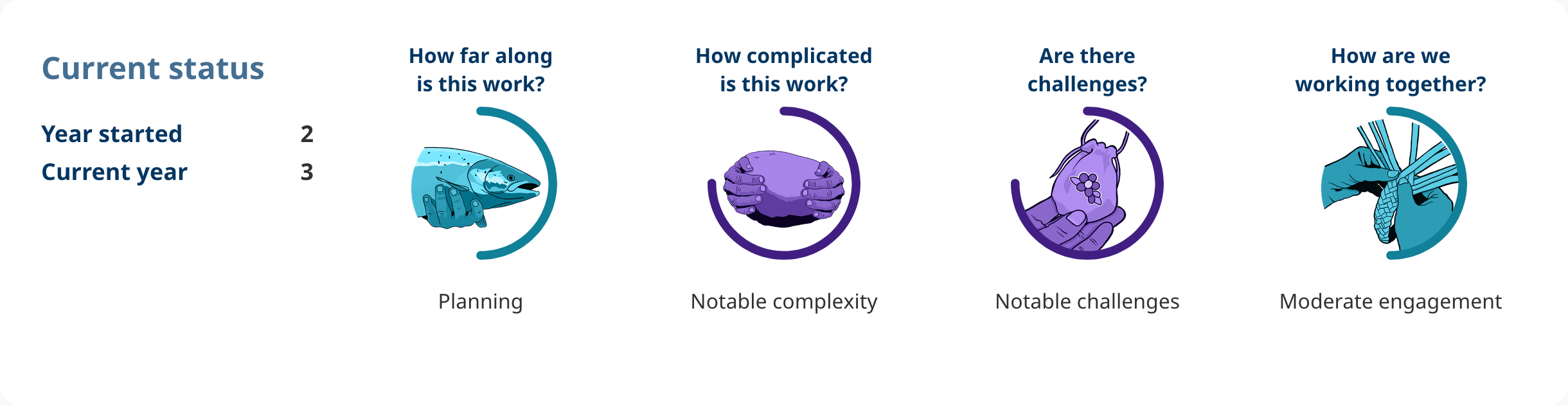
How are we working together?
The Ministry of Agriculture and Food is advancing 4.47 through direct government-to-government engagement with First Nation and Modern Treaty Nation governments (First Nations) under the Cannabis Control and Licensing Act (CCLA), including Section 119 (s.119) agreements. Section 119 provides a unique opportunity to advance shared interests related to cannabis by enabling variances to provincial cannabis legislation, subject to Cabinet approval.
Dialogue continues between the ministry and First Nations who currently hold or are interested in entering section119 cannabis agreements. First Nations regularly bring forward new perspectives and ideas to strengthen section119 agreements and collaborative governance of cannabis. As one example, several First Nations have engaged the ministry on early-stage ideas for Indigenous-led approaches to cannabis governance and jurisdiction.
Draft policy materials around 4.47 were circulated by the ministry to the First Nation Leadership Council (FNLC) in early 2025.Throughout the year, FNLC and the ministry have continued to meet to discuss advancing Action 4.47 within the shared context of limited capacity and competing priorities. Both parties reaffirmed their commitment to progressing this work within existing capacities.
The ministry also endeavours to include First Nations perspectives in broader cannabis sector projects. For example, the B.C. Cannabis Legal Market Strategy, an internal tool to coordinate B.C.’s efforts to support the provincially regulated cannabis sector, includes a key goal that cannabis is governed collaboratively with First Nations alongside public health and safety goals.
Additionally, in the summer and fall of 2025, First Nations participated in ministry-hosted engagements focused on provincial regulations around cannabis retail sales, including cannabis sales at events and market control mechanisms.
Are there challenges?
Implementing Action 4.47 through a broad, province-wide approach to cannabis governance would require significant input and resources from First Nations and leadership organizations, as well as multiple areas within the ministry and across the provincial government. This work could also intersect with federal cannabis jurisdiction and federal participation could also be necessary to facilitate collaborative governance arrangements between First Nations and the Province.
Resources available to advance this work on a province-wide scale are limited, as all partners are managing competing priorities and emerging issues, such as responding to emerging economic pressures and other sectoral demands. As such, the ministry has been focusing on advancing Action 4.47 through direct government-to-government engagement with First Nations.
Advancing Action 4.47 requires balancing and careful navigation of diverse perspectives and priorities. Meaningful progress takes time, strong coordination across multiple governments, and ongoing engagement with First Nations and leadership organizations.
Highlights
The ministry is advancing government-to-government work with First Nations through section 119 of the CCLA. In 2024, the mandate for section 119 agreements was expanded to include a new financial component. Since then, new negotiations have been undertaken under this enhanced mandate, with several new agreements currently nearing completion. Ongoing engagement between First Nations and the ministry continues to create space for new perspectives and innovative ideas towards continued evolution of section 119 government-to-government agreements.
The ministry also continues to develop tools and programs to support First Nation governments, communities and Indigenous entrepreneurs in the broader agriculture sector, including cannabis. Examples include the Indigenous Small-Scale Greenhouse Training Project and the B.C. Indigenous Pathfinder Service.
Previous years’ progress
Highlights
In Summer 2024, the scope of section119 agreements was expanded to include a financial arrangement, enabling a portion of the provincial wholesale mark-up to be transferred to First Nation governments. To date, there are seven First Nations with section 119 agreements, and PSSG is reaching out to other First Nations who may be interested in entering into a section119 agreement.
The new financial arrangement has been positively received by First Nations governments.
The B.C. Indigenous Cannabis Business Fund, administered by the New Relationship Trust, was developed by the FNLC, PSSG, and Indigenous Services Canada in 2022. This program helps address gaps in capacity and funding to support inclusion of First Nations communities and businesses in the regulated cannabis sector. To date, the Province has provided $6 million to the program, including a final installment of $1.25 million in 2024/25.
Since inception of the program, the New Relationship Trust has disbursed $3.2 million, supporting 13 cannabis-related projects.
How are we working together?
In 2022/23, the Ministry of Public Safety and Solicitor General (PSSG) and First Nations Leadership Council (FNLC) co-developed a discussion paper to directly engage with the Alliance of BC Modern Treaty Nations (the Alliance) and B.C. First Nations, leading to a ‘what we heard report’ released in the fall of 2023 that summarized perspectives and recommendations to the Province and the First Nations Leadership Council on how to move forward on cannabis-related governance and jurisdiction. In 2023, FNLC, the Alliance and the ministry also began initial development of policy approaches to shape the next phase of engagement.
Since this initial engagement, FNLC and the ministry have continued working collaboratively to develop next steps in advancing policy development and engagement on cannabis governance and jurisdiction.
In 2024, the Province worked on a recurring basis with First Nations to develop, seek approval, and implement a new financial arrangement related to government-to-government cannabis agreements under section 119 of the Cannabis Control and Licensing Act, 2018.
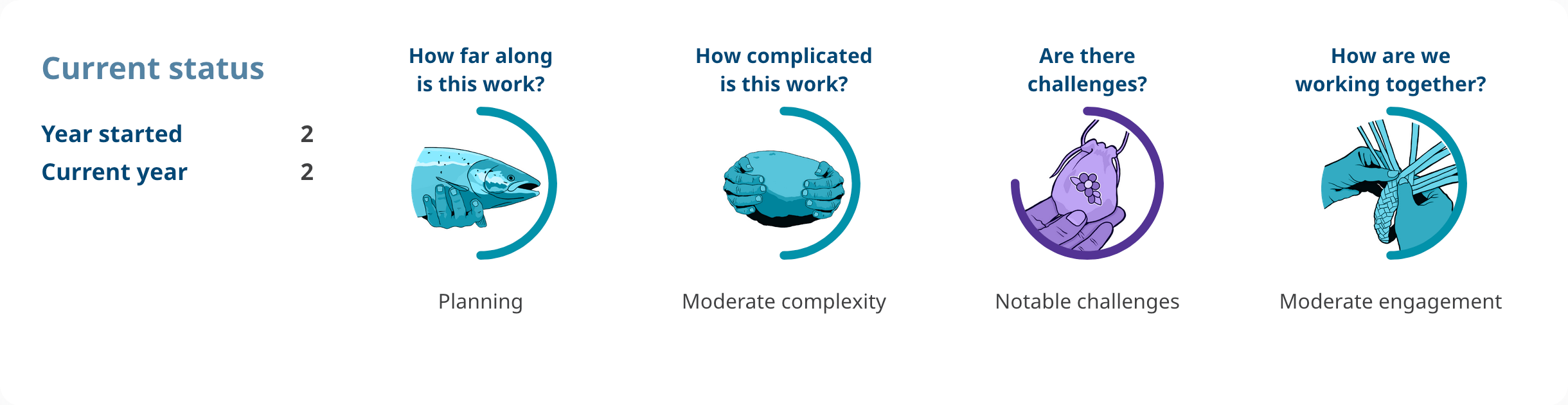
Are there challenges?
The complexity of this work requires careful navigation of diverse views and interests on how collaborative governance and jurisdiction between First Nations and the Province could be meaningfully advanced. This work takes time, continued resources for co-development processes, cross-government coordination, and deep consultation and co-operation with Indigenous Peoples.
The Canadian cannabis sector continues to experience substantial challenges, with many small and medium sized businesses finding it increasingly difficult to attain and/or maintain financial viability. The Province is continuing to lead development and implementation of actions to support the provincially regulated cannabis sector.
This project is further complicated by the intersection of cannabis jurisdiction with federal law. Federal involvement and action may also be required to ensure the success of local cannabis operations, and to support collaborative approaches to cannabis governance and jurisdiction between First Nations and the Province.
Highlights
First Nations, including the Alliance of BC Modern Treaty Nations, were invited to engagement sessions held in the spring of 2023, hosted in partnership with the First Nations Leadership Council. The engagements aimed to identify shared priorities and inform the development of principles to guide the advancement of collaborative cannabis governance and jurisdiction. The Ministry of Public Safety and Solicitor General co-developed the engagement sessions and the discussion paper with the First Nations Leadership Council. A summary report of these engagements was completed and circulated to all First Nations in the fall of 2023.
The Province contributed a total of $3.50 million to the B.C. Indigenous Cannabis Business Fund in 2023/24. Since the program’s launch in December 2022, the Province has contributed a total of $4.75 million to the initiative. The program was co-developed in partnership with the First Nations Leadership Council and the federal government and is administered by the New Relationship Trust and participating Aboriginal Financial Institutions. It provides financial and business planning support to First Nation communities and Indigenous entrepreneurs in B.C. that want to participate in, and advance cannabis-related economic development opportunities.
How are we working together?
After completing the five engagement sessions in the spring of 2023, a “what we heard” report was developed and circulated to all First Nations later in that fall. An Indigenous majority owned engagement firm facilitated the engagement sessions and produced the report. It summarizes the contributions from over 50 First Nations and Indigenous organizations who provided perspectives and recommendations to the Province and the First Nations Leadership Council on how to move forward on cannabis-related governance and jurisdiction. The First Nations Leadership Council partnered with the Ministry of Public Safety and Solicitor General to design and deliver the engagement and contributed to the final report.
From April to August 2023, the Ministry met on a recurring basis with various partners, including the First Nations with Cannabis Control and Licensing Act section 119 agreements, the Alliance of BC Modern Treaty Nations, as well as the First Nations Leadership Council to continue discussions around cannabis governance and jurisdiction.
Throughout this reporting year, the Ministry of Public Safety and Solicitor General also met with section 119 partners on an as-needed basis to support advancing interests as they relate to government-to-government agreements.
Are there challenges?
The Canadian cannabis sector continues to experience substantial challenges, with many small and medium sized businesses finding it increasingly difficult to maintain profitability. In addition to adjusting the provincial cannabis regulations and policy, the Ministry of Public Safety and Solicitor General is advocating for federal changes to support the success of the legal cannabis sector, particularly for small scale and Indigenous operators. Federal involvement and action is required to ensure the success of smaller scale cannabis operations and to support collaborative cannabis governance and jurisdiction with First Nations and B.C.
Provincial discussions reveal that there are diverse views on how collaborative governance and jurisdiction between First Nations and the Province could be advanced. This work is further complicated as cannabis jurisdiction intersects with federal law. In March 2024, the federal government released the final report of the Legislative Review of the Cannabis Act. While this report includes recommendations that are responsive to the interests of First Nations in B.C., any potential changes will take time to advance through the federal process.