
How are we working together?
Métis Nation British Columbia (MNBC), the Ministry of Health (HLTH) and the Ministry of Indigenous Relations and Reconciliation (MIRR) maintain a regular sub-table focused on Métis health, mental wellness and harm reduction priorities.
Key areas include funding and capacity to support Métis-specific work, Métis cultural wellness, Métis mental health and wellness programming, harm reduction supports, health promotion initiatives and improvements to provincial health information systems.
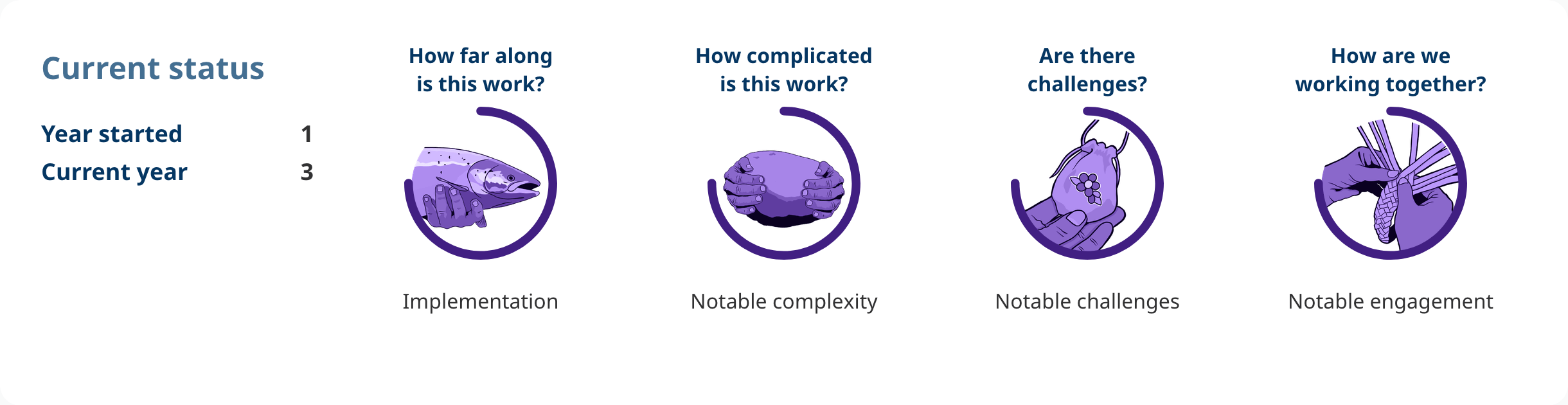
During 2025/2026, progress included development of a draft work plan that set out key priority areas, current initiatives underway across both partners and identified practical steps to improve coordination with Regional Health Authorities (RHAs). Through the work of the sub-table, HLTH representatives now participate in regular leadership-to-leadership meetings with RHAs. This engagement supported clearer, more consistent information sharing and strengthened how Métis specific knowledge and priorities are shared between MNBC, RHAs and HLTH.
The Office of the Provincial Health Officer and MNBC have also been collaborating on the Métis Population Health Program and are set to launch the first interim report in 2026 titled Taanishi Kiiya: Miiyayow Métis Saantii Pi Miyooayaan Didaan BC.
Are there challenges?
Maintaining reporting requirements with external partners has been noted by MNBC as an ongoing concern. In response, HLTH has moved to consolidate disparate funding streams, including legacy funding from the former Ministry of Mental Health and Addictions, into a single multi-year funding arrangement with streamlined reporting.
MNBC has identified funding and capacity constrains, which continue to influence the pace and scope of program development. In 2025, the end of several federal funding streams affected multiple MNBC health and wellness programs, including peer support outreach, health system navigation, counselling supports and services related to intergenerational trauma. In response, HLTH provided temporary funding to maintain these programs through the 2025/2026 fiscal year and is exploring longer-term options to address these funding inequities.
MNBC has identified several priority areas in need of sustained long-term funding, including system governance, funding to support Elders and rural citizens and the management of identity-specific barriers affecting 2SLGBTQQIA+, youth, girls and women.
Highlights
The Métis Health, Mental Health and Wellness, and Harm Reduction Sub-Table (which includes HLTH, MNBC and MIRR) has made substantial progress on the creation of the draft work plan that identifies shared priorities and will be positioned to clearly measure progress, with time-phased goals, and key performance indicators over the next several years once fully implemented. Through the work of the Sub-Table, the relationship, partnership and commitments of MNBC, HLTH and MIRR staff continue to advance and grow.
Previous years’ progress
Highlights
Métis Nation BC hosted two Girls Gatherings, which took place in September 2024, and in February 2025, supported by one-time funding from the Province. The event included an overnight camp gathering held in Prince George for Métis girls ages 8-15. It included teachings and cultural activities facilities by Elders, knowledge holders, and mental health service providers focused on mental wellness and life promotion to increase wellness strategies for Métis girls. Each gathering also included a sashing ceremony.
The feedback received from these gatherings was extremely positive. Many families reached out to share the impact the gatherings had on their families and how they plan to pass teachings on to other family and community members. Learn more about the Métis Girls Gathering.
Métis Nation BC hosted six regional harm reduction gatherings throughout Fall 2024 and early 2025, supported by one-time funding from the Province. These gatherings brought together community to learn about services available, share teachings around healing and culture and share perspectives of what Métis harm reduction is. These gatherings provided opportunities for Métis community members to learn information about local resources (including Métis Nation BC, Foundry, Health Authority partners, etc.), how to administer naloxone, and strategies for building community relationships. The knowledge shared within communities will inform a harm reduction framework for Métis Nation BC that will be reflected in services offered by Métis Nation BC that weave culture and community into harm reduction. Many community members have expressed gratitude for these gatherings and have built relationships and systems of support that did not previously exist. Learn more about Virtual Harm Reduction Gatherings.
How are we working together?
Métis Nation BC and Ministry of Health representatives meet monthly to discuss Métis Nation BC issues impacting Métis health and wellness, and to explore opportunities to partner on advancement of health system priorities. The Ministries of Indigenous Relations and Reconciliation and Health maintain regular bilateral meetings with Métis Nation BC to discuss mutual shared priorities and hold a quarterly meeting specifically on advancing key priorities and actions with the goal of improving health and wellness for Métis peoples in B.C. From this engagement, several working groups and meeting forums support provincial engagement on health and wellness overall.
The work plan will evolve over time to reflect key collaborative priorities and includes:
- Commitment to enhance cultural safety and humility for Métis peoples in B.C.;
- Supporting the mental health and wellness of Métis peoples in B.C., including exploring harm reduction and substance use programming;
- Improving Métis peoples’ efforts to support lifestyle as medicine and address risk factors impacting health and wellness; and
- Enhancing provincial information systems.
In addition, the Mental Health and Addictions portfolio of the ministry has a monthly meeting scheduled with Métis Nation BC to discuss mental health and harm reduction priorities. Using a distinctions-based approach, the ministry has been mindful of including feedback and perspectives provided by Métis Nation BC in the development of policies and programs throughout areas of work.
In Spring 2024, the then Ministry of Mental Health and Addictions provided Métis Nation BC with a $500,000 grant in support of culture-based recovery and aftercare. In addition, the Province has recently increased the $375,000 annual capacity funding provided to Métis Nation BC with an additional $125,000 for a total of $500,000 annually.
Are there challenges?
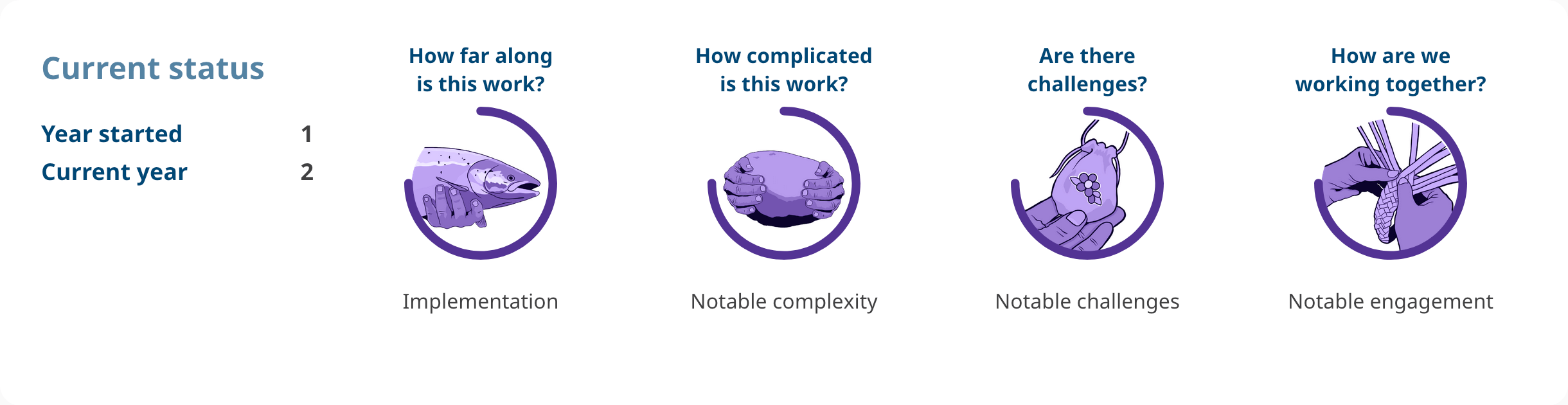
Métis Nation BC has identified various challenges experienced by the organization, including funding and capacity that are impacting their ability to move forward with engaging on external opportunities and initiatives. Meaningful engagement and participation as well as maintaining reporting requirements with external partners has been noted by Métis Nation BC as exceeding their existing capacity.
The organization has expressed that being able to access stable and flexible long-term funding, such as multi-year agreements, would significantly reduce administrative burdens and would provide continuity for programming. As a result, the ministry and Métis Nation BC now have a multi-year funding arrangement through 2025-26 and will explore options for future funding. Métis Nation BC has expressed a desire to establish 5- to 10-year flexible core agreements that reduce administrative burden, embed cost-of-living escalators, and would ideally align with Métis Nation BC’s fiscal cycle.
Highlights
On September 11, 2023, Métis Nation BC (MNBC) signed a letter of understanding with the Provincial Health Services Authority (PHSA). The letter recognizes the common goals between the two organizations of providing equitable access to health services for Métis people, and improving health and wellness outcomes for Métis people within PHSA’s health services in B.C.; the letter also recognizes that MNBC Regional Governance Councils have the responsibility as elected officials of MNBC to provide guidance on the delivery of health services to Métis people, and commits MNBC and PHSA to ensuring that the planning and delivery of Métis health services are appropriate, culturally safe, and humble. MNBC has now signed or renewed letters of understanding with all provincial health authorities.
On December 7, 2023, MNBC and the Office of the Provincial Health Officer refreshed their letter of understanding.
The 2021 baseline report Taanishi Kiiya: Métis public health surveillance program monitors and reports on the health and wellness of Métis people over ten years, tracking indicators co-developed by the Office of the Provincial Health Officer and MNBC; interim reports are to be released every three years.
How are we working together?
MNBC and Ministry of Health representatives meet regularly to review and discuss issues impacting Métis health and wellness, and to explore opportunities to partner on health system priorities. MNBC and the Ministry of Mental Health and Addictions (MMHA) meet monthly to discuss priorities and opportunities to continue working towards the health and wellness priorities outlined in the October 27, 2021 letter of intent (supporting the mental health and wellness of Métis people in B.C., including exploring harm reduction and substance use programming), as well as additional priorities as they emerge.
In 2023, in support of the province-MNBC Métis relations working table, the Ministry of Health, MMHA, and MNBC established a Métis health, mental health and wellness, and harm reduction table.
Are there challenges?
MNBC has stated that funding supports are inadequate to address community needs or facilitate MNBC’s engagement in provincial initiatives and opportunities; current funding is from multiple partners, resulting in a heavy administrative burden.
Program continuity is at risk due to funding uncertainty. Métis health initiatives, such as the Métis counselling connection program, are at risk of not being able to continue if funding is not renewed. The program has exceeded capacity and is currently waitlisted.
The Ministry of Heath now provides $825,000 in annual funding for Métis health initiatives.
MMHA provides $375,000 to support capacity building on partnered mental health and wellness initiatives. In addition, MMHA has provided MNBC with $500,000 as part of the culture-based recovery and aftercare grants.
Sustainable funding for MNBC to meaningfully engage and participate in partnership initiatives is a challenge to this action. MNBC capacity to engage with multiple streams of work may delay development/implementation of specific initiatives and partnership opportunities.
Capacity issues may result in MNBC being unable to meaningfully engage and participate in the work. MNBC have stated that their reporting volume is exceeding capacity.
Discussions about the possibility for shared reporting between the Ministry of Health and MMHA to streamline reporting and reduce the administrative burden/redundancies. Funding and capacity – funding previously was renewed annually which posed challenges for MNBC to meet reporting and administrative requirements. MNBC has expressed a need for long-term funding that is stable and flexible, such as multiple year agreements, to reduce administrative burden and provide continuity for programming; The Ministry of Health and MNBC now have a multi-year funding arrangement in place through 2024-25 and will explore options for future funding.
Highlights
In late 2022, the Ministry of Indigenous Relations and Reconciliation (MIRR), Ministry of Health (MoH) and Ministry of Mental Health and Addictions (MMHA) came together with Métis Nation British Columbia (MNBC) to develop a new Health, Mental Health and Wellness, and Harm Reduction Sub-Table, under the Métis Partnership Table. This sub-table brings together key system partners to explore ways to advance Métis health and wellness priorities, strengthen MNBC’s relationship with the Province and to explore opportunities to develop and promote Métis-specific health and mental health and wellness programming in the B.C. health system.
MNBC has made significant strides in strengthening their relationship with health system partners over the past year, through utilization of the increased MoH-MNBC funding resources. These resources, which include ongoing annualized funding, have supported the hiring of regional health co-ordinators and other regional-centred programming that help Métis people to access appropriate care, engagement in joint working groups and development of Indigenous children and youth health and wellness education and training modules.
Indicators
- Amount of funding provided: In 2022/23, MoH and MMHA provided MNBC with a total of $2.2 million ($1.2 million in annualized funding; $1 million grant) to support capacity building for engagements, partnership and activities to support Métis health, mental health and wellness.
- Strategic engagement underway: The Métis Health, Mental Health and Wellness and Harm Reduction Sub-Table was established.
How are we working together?
Partnership and collaboration forums include working groups, the In Plain Sight Task Team, monthly/bi-monthly executive meetings, a quarterly assistant deputy ministers (ADM) meeting and the newly established Health, Mental Health and Wellness, and Harm Reduction Sub-Table.
Are there challenges?
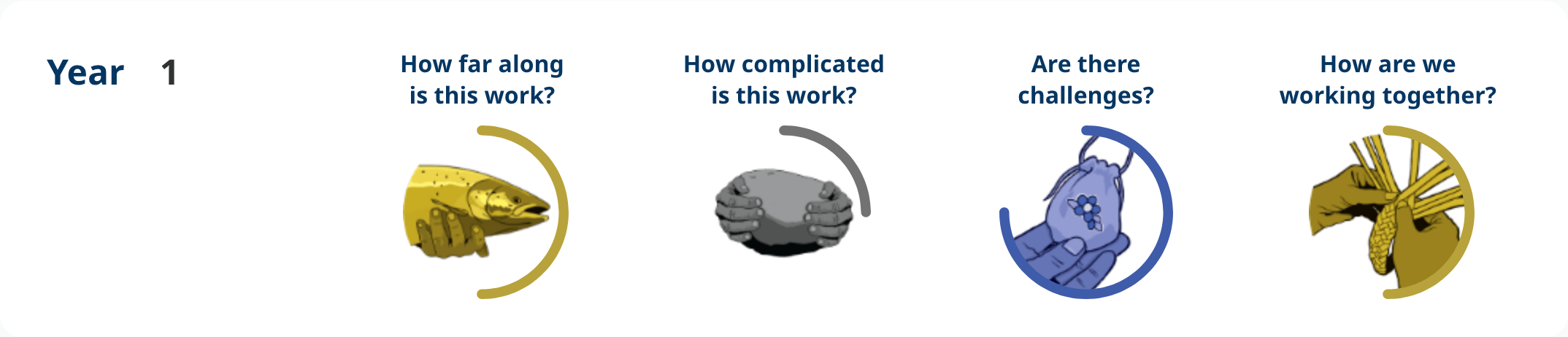
Challenges include limited MNBC capacity to engage on multiple streams of work which may delay development and implementation of specific initiatives and partnership opportunities.
MNBC has stated that funding supports are inadequate to address community needs and facilitate MNBC’s engagement in provincial initiatives and opportunities; as well, the current funding from multiple partners in numerous agreements is resulting in a heavy administrative and reporting burden.