How are we working together?
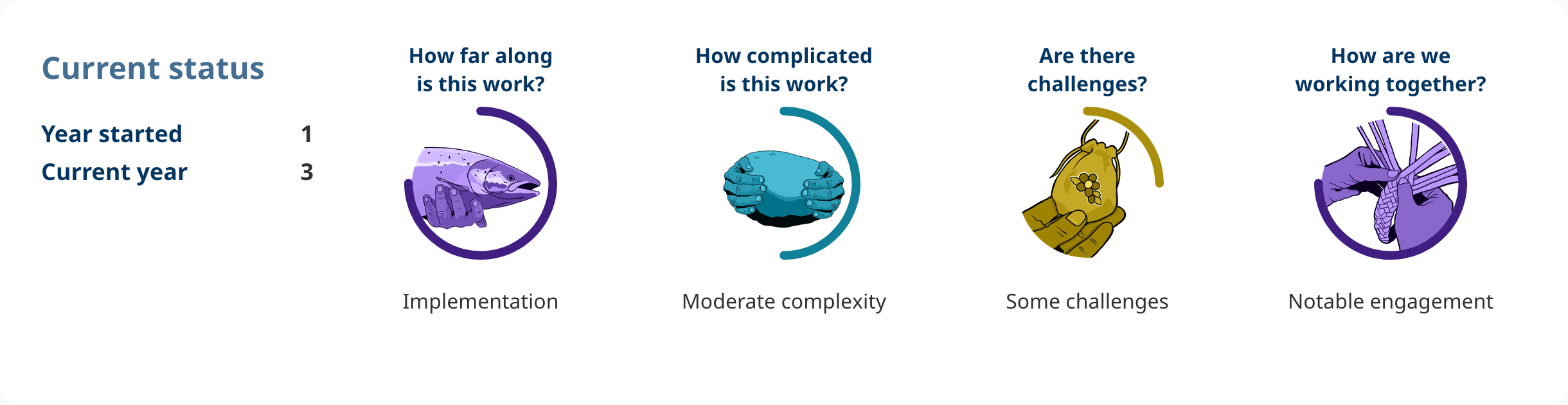
The Province is partnering with urban Indigenous organizations on establishing an engagement model to support collaboration with urban Indigenous leaders. This work takes on a community-led approach with a focus on relationship building which increases the Province’s awareness of the contributions and history of urban Indigenous people and cultural safety. In 2025, the engagement model evolved to include a broader group of partners following the work outcomes of the Provincial Urban Leaders Working Group and the Urban Coalitions Fall Gathering in 2024.
In addition to the Ministry of Indigenous Relations and Reconciliation (MIRR), partners in the BC Urban Indigenous Caucus now include the Ministry of Social Development and Poverty Reduction, B.C.’s urban Indigenous coalitions, BC Association of Aboriginal Friendship Centres, Aboriginal Housing Management Association and other urban Indigenous organizations. Partners met bi-weekly through 2025 with participation dependent on focus area under discussion.
In 2025, MIRR and partners planned and hosted sessions in Nanaimo, Kamloops, Prince Rupert and Fort St.John to further expand engagements on Action 4.21 in these regions.
An internal urban cross-ministry working committee is also being established to keep ministries informed and involved on urban-related topics and build awareness of urban Indigenous organizations’ contributions across the province. These engagements will help to identify priorities and topic areas for discussion at the in-person gathering described in Action 4.22.
Are there challenges?
As an active member of the engagement model being established, the Province continues to focus on building strong relationships with partners, which demonstrates a commitment to improving the lives of urban Indigenous Peoples. This approach can be resource intensive as it requires in-person gatherings relying on culturally-grounded facilitators to engage participants. Partners continue to reflect the need for durable funding and a continued prioritization of funding for urban Indigenous service providers.
Highlights
The Province is committed to an Indigenous-led process that brings together urban Indigenous leaders to create better outcomes for Indigenous Peoples in urban areas.
In 2025, MIRR led the BC Urban Indigenous Caucus meetings, a bi-weekly series previously led by a coalition, that alternates between sessions focused on internal coalition needs and virtual-gatherings that enable external partner presentations. With the consensus of all partners, the Caucus has broadened from coalitions only and is now comprised of urban Indigenous coalitions in B.C., the BC Association of Aboriginal Friendship Centres and other partners, such as Aboriginal Housing and Management Association and Native Courtworker and Counselling Association of BC.
The Caucus discussed Declaration Act Action Plan items, urban priorities and other reconciliation activities. Since April, presenting ministries have shared funding opportunities, partner projects, ministry programming and major policies with urban Indigenous partners. At these presentations, feedback is sought and received from urban organizations.
In fall 2025, engagement sessions were held in smaller urban regions where there has been a lack of opportunity to engage on the Declaration Act implementation. Sessions in Kamloops, Prince Rupert, Fort St. John and Nanaimo, B.C. were well received and aligned with existing feedback that an engagement model for urban people will help the Province understand the unique perspectives of this demographic. MIRR views the engagements, as well as the bi-weekly series described above, as significant progress in the implementation of this action item.
Previous years’ progress
Highlights
The Province is committed to an Indigenous-led process that brings together urban Indigenous leaders to create better outcomes for Indigenous Peoples in urban areas. As an active member of the Working Group, the Province is building strong relationships with partners, including BC’s Urban Indigenous Coalitions, the BC Association of Aboriginal Friendship Centres and others.
In October 2024, representatives from the Ministry of Indigenous Relations and Reconciliation and urban Indigenous Leaders attended the Gathering of BC’s Urban Indigenous Coalitions and participated in conversations and information sharing related to the Declaration Act and the Declaration Act Action Plan. Participants expressed gratitude for the Indigenous-led approach, and surveys and follow-up reporting highlighted the importance of establishing an engagement model and increasing involvement from government.
This reporting year a new website, Urban Indigenous Peoples in BC, launched and acts as a repository for information sharing and learning resources to increase awareness of B.C.’s urban Indigenous People. The website includes statistical information, as well as reporting from partners, such as the Gathering of Urban Indigenous Coalitions. The website delivers on the recommendations from the October 2023 “What We Heard” report. Released in 2023, the report reflects early engagement themes from urban Indigenous leaders, such as recommendations to increase data and research opportunities and increase the general public awareness of the contributions of BC’s urban Indigenous people.
How are we working together?
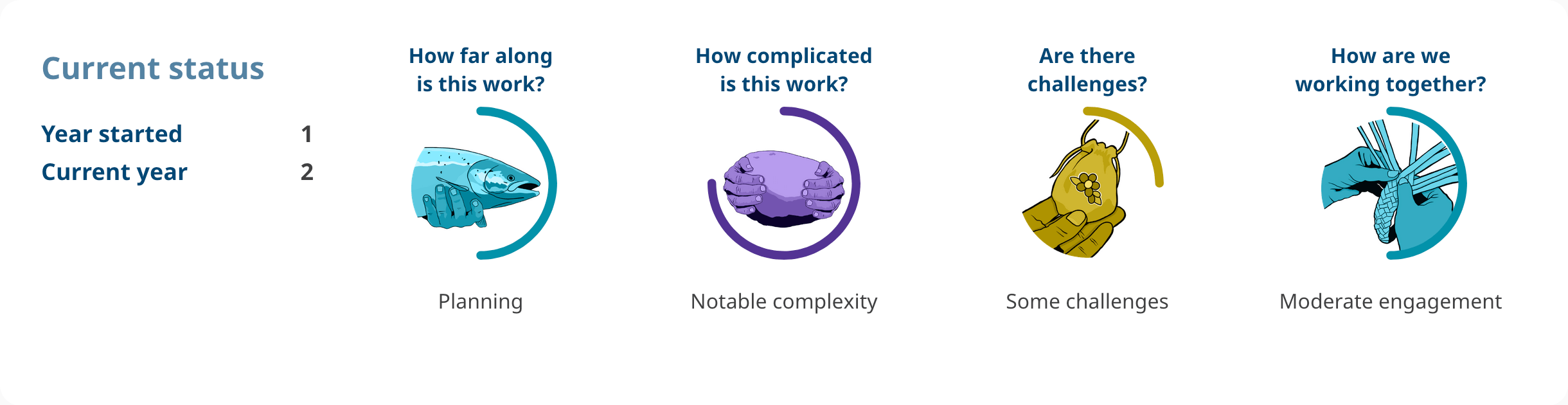
The Province continues to work with urban Indigenous partners to establish an engagement model for urban Indigenous leaders to communicate and collaborate with the Province.
This work is taking a community-led approach, with a focus on relationship building, increasing the Province’s awareness of the contributions and history of urban Indigenous people, and cultural safety.
Important groundwork has been laid, such as creation of the Provincial Urban Leaders Working Group (the Working Group) which builds on Indigenous-led urban Indigenous leadership dialogues held in 2023. The Working Group is comprised of the Victoria Urban Indigenous Coalition and the Victoria Native Friendship Centre, the Ministry of Indigenous Relations and Reconciliation, and the Ministry of Social Development and Poverty Reduction. The Working Group continues to meet regularly and has a collaboratively built workplan which is being put into place.
To guide the development of an engagement process with urban Indigenous People, the Working Group has hosted gatherings, surveys and research efforts. This initial engagement provided an opportunity for urban Indigenous people to have their voices heard – including more than 50 urban Indigenous leaders.
The Working Group has met consistently since it was established in October 2023 and held 10 meetings in 2024. To date, these meetings have focused on priorities and activities described within the collaboratively built workplan. The Working Group is prioritizing grassroots, Indigenous-led relationship building and increasing the Province’s awareness of the rights, experiences and needs of urban Indigenous people.
Open, transparent and community-led work is underway and building towards an engagement model that facilitates a connection between urban Indigenous leaders and the Province.
The Victorian Urban Indigenous Leadership Table (one of B.C.’s urban Indigenous coalitions) held community meetings in the summer and fall 2024 and winter 2025, including an in-person meeting of more than 65 urban Indigenous leaders, rights and title holders and the other B.C. urban Indigenous coalitions, called the Gathering of BC’s Urban Indigenous Coalitions. The intent of these meeting aligns with the outcomes of the “What We Heard” report and support from the urban Indigenous community.
Are there challenges?
A grassroots, community-led approach is essential to build trust-based, long-term relationships, and strengthen the engagement process. Risks include the currently narrow scope of engagement, which needs to be broadened (both in geographic area and recognition of the diversity and complexity within the urban Indigenous population in B.C.) to ensure voices from throughout the province are included.
The Working Group is currently building out relationships with urban Indigenous leaders and partners throughout all regions of B.C. to ensure a broader group of urban Indigenous voices and interests are included at the table. Partners have also expressed the need for durable funding and a continued prioritization of funding for urban Indigenous service providers.
Highlights
The Province committed to an Indigenous-led process that brings together urban Indigenous leaders to create better outcomes for Indigenous Peoples in urban areas. On February 22, 2023, an initial dialogue was attended by 50+ urban Indigenous leaders from across the province. This started the conversation and provided an opportunity to explore how people and communities can organize to have their voices heard and mobilized in the context of the Declaration on the Rights of Indigenous Peoples Act.
A follow-up online dialogue was held on June 1, 2023, and a What We Heard Report was issued in September 2023. Participants expressed gratitude for the Indigenous-led approach, and going forward, are looking to increased involvement from the Province.
A collaboratively built workplan that reflects on the recommendations of the What We Heard Report is being developed by the Victoria Urban Indigenous Coalition, with support from the Ministry of Indigenous Relations and Reconciliation and the Ministry of Social Development and Poverty Reduction, to guide this working group’s current activities. While this demonstrates great forward-moving action, there is more to be done before Action 4.21 can be considered complete.
Urban Indigenous leaders will inform the development of the table and subsequent development of a five-year plan to address the priorities of urban Indigenous people. Indicators will be developed iteratively in consultation and co-operation with Indigenous partners through the urban leadership forum and table.
How are we working together?
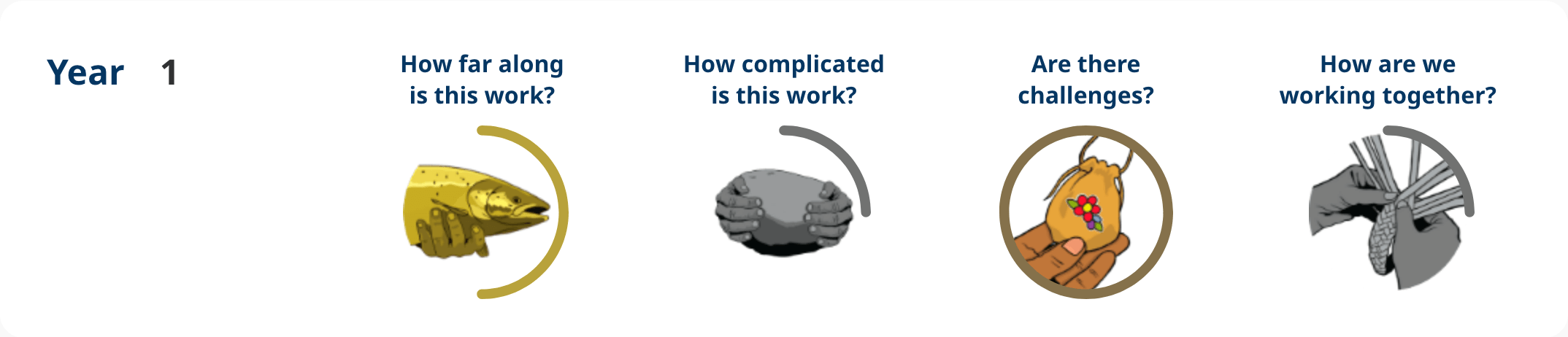
This work is taking an Indigenous-led approach, with a focus on relationship building, increasing awareness of the contributions and history of urban Indigenous People, and cultural safety. As a start, a monthly working group with both external and provincial government partners has been established. The working group is comprised of the Victoria Urban Indigenous Coalition, the Victoria Native Friendship Centre, the Ministry of Indigenous Relations and Reconciliation, and the Ministry of Social Development and Poverty Reduction. These meetings focus on activities that will be described within the collaboratively built workplan (currently being developed), such as relationship building and increasing B.C.’s awareness of urban Indigenous People. These activities are guiding the development of an engagement process with urban Indigenous People. A phased approach is being used to hear from urban Indigenous People and organizations first in an Indigenous-led way. In the next phase, the Province will be engaging directly with groups including title holders.
Are there challenges?
A grassroots community-led approach is essential to build trust-based, long-term relationships, and strengthen the engagement process. Risks include the currently narrow scope of engagement which needs to be broadened (both in geographic area and recognition of the diversity and complexity within the urban Indigenous population in B.C.) to ensure all areas of the province are included. The working group is currently building out relationships with urban Indigenous leaders and partners throughout all regions of B.C. to ensure a broader group of urban Indigenous voices and interests are included at the table. This requires both time and resources. Creating new processes takes time and resources, and a thoughtful approach is essential. The working group wants to take the time with Indigenous partners to get this right.
Highlights
The Province committed to an Indigenous-led process that brings together urban Indigenous leaders to create better outcomes for Indigenous Peoples in urban areas. On February 22, 2023, the inaugural Provincial Urban Indigenous Leadership Dialogue was attended by more than 50 urban Indigenous leaders from across the province. Participants were asked to explore what a co-ordinated network of urban Indigenous community leaders could look like, how to ensure no one gets left behind and how to ensure that Indigenous Peoples and values lead the space.
Indicators
- Number of engagement participants in programs and events: 60 people in attendance at an information session held on December 1, 2022.
- Number of engagement participants in programs and events:51 people in attendance at the inaugural Provincial Urban Indigenous Leadership Dialogue on February 22, 2023.
How are we working together?
Throughout 2022 and early 2023, the Ministry of Indigenous Relations and Reconciliation (MIRR) and the Victoria Native Friendship Centre (VNFC) met bi-weekly to determine schedules, budgets, roles, responsibilities and messaging to support urban Indigenous Peoples. Urban Indigenous leaders will inform the development of the advisory table and subsequent development of a five-year plan to address the priorities of urban Indigenous Peoples along with indicators.
Are there challenges?
This action item was identified as having no challenges at time of reporting. Further Annual Report updates may change this action’s challenge icon status indicator.