
How are we working together?
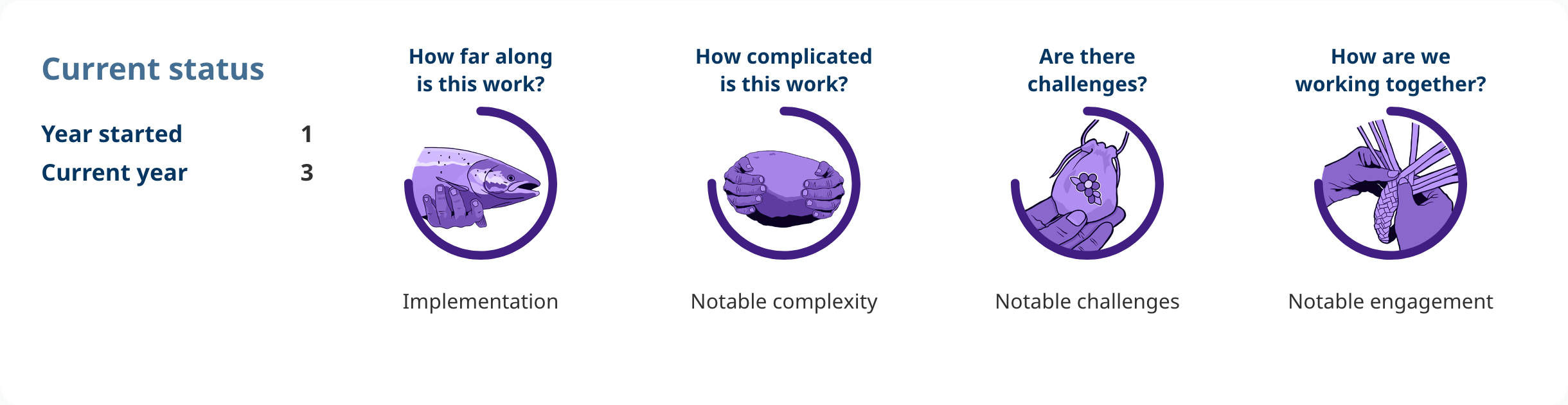
The BC Public Service Agency (BCPSA) provides human resource leadership, expertise, services and programs that contribute to better business performance across ministries. The BCPSA continues to communicate with partners to provide progress updates, review documents and incorporate feedback into the new Indigenous Crown Relations Essentials (ICRE) level one training, as well as for future companion course development.
The BCPSA is the lead for internal partners in the provincial government, including the Crown Agencies and Board Resourcing Office (CABRO). CABRO, co-lead for this action item, is responsible for ensuring public sector organizations have access to this training when it is available. CABRO will adapt and deliver ICRE to Public Sector Organization appointees and will ensure appropriate information and supports are available for this audience.
The BCPSA has been working through ICRE level one, draft version five revisions and supporting change management activities related to the course development, including drafting the Guide to Indigenous Crown Relations Essentials. These actions will help BC Public Service people leaders to prepare and better understand their roles in Indigenous cultural safety ahead of the course launch.
The draft version five revisions of ICRE are anticipated to be shared with Indigenous partners for input in spring 2026. Other activities to support organization readiness for ICRE include the expansion of cultural safety-related programming through the BCPSA’s corporate House of Indigenous Learning (HoIL). The HoIL delivered cultural safety related training to over 2,800 employees between June 2025 and March 2026. This includes webinars and face-to-face learning through experiential workshops such as Building Bridges Through Understanding the Village and launching Indigenous employee virtual circles.
Are there challenges?
ICRE is level one of a three-level framework previously endorsed by partners. The content for ICRE level one is vast, which is a challenge for a mandatory e-learning course. The depth and complexity of topics shared in level one requires further learning. Opportunities for further learning will be explored in level two, level three and future companion courses.
Work to coordinate and align perspectives on course content across the BC Public Service has been extensive and complex, resulting in extended timelines for releasing draft version five to partners. Additionally, work to align with other Declaration Act Action Plan commitments and other legislative requirements (such as the Anti-Racism Data Act and the Anti-Racism Act) have also been contributing elements.
Differing perspectives on content from internal and external partners on historical events, the ongoing impacts of colonization and legal interpretations of Aboriginal rights and title are significant. There is a risk of not accurately reflecting the diversity of Indigenous Peoples’ experiences in B.C. in course content. The BCPSA continues to work towards ensuring course content is reflective of differing perspectives. Work continues to build capacity across the BCPSA and its network of learning developers, subject matter experts and facilitators.
Highlights
Building on activities completed during the last reporting cycle, such as extensive engagement with human resources departments across the BC Public Service, work occurred within the BCPSA to prepare for the launch of ICRE. Actions such as developing the draft Guide to Indigenous Crown Relations Essentials will help prepare BC Public Service people leaders better understand their roles in Indigenous cultural safety ahead of the course launch.
Extensive engagement occurred across the BCPSA and BC Public Service ministries, resulting in updates to draft content to be shared with partners in spring 2026. Revisions include plain language edits, content on the Oregon Boundary Treaty and Douglas Proclamation and information reflecting differing First Nations and Crown perspectives. The updated drafts also highlight provincial efforts in areas such as child welfare, education, health care, implementation of the Truth and Reconciliation Commission Calls to Action and the Declaration Act and Action Plan.
Preparatory learning focused on cultural safety continued across the BC Public Service. The HoIL expanded its offerings, including an Indigenous speakers’ series and Indigenous employee wellness circles, to further support learning and connection.
Previous years’ progress
Highlights
In alignment with a distinctions-based approach, the BC Public Service Agency continues to work with FNLC, the Alliance of BC Modern Treaty Nations, Nations with historic treaties, and Métis Nation BC to co-develop and deliver a learning framework that addresses the learning needs identified in this action.
These partners provide guidance and feedback on the mandatory e-course (level 1 of 3) content currently under development, as well as provide feedback on change management and communications planning. The timelines for launching the course have been adjusted to accommodate robust internal and external partner feedback.
The BCPSA is committed to the co-development of learning with partners and taking the time needed to meaningfully and respectfully include partners’ perspectives in content development. Once feedback is incorporated, the second phase of the Indigenous Crown Relations Essential pilot and course launch will follow as soon as possible. Once the course is ready, the Crown Agencies and Board Resourcing Office will develop a communications and change management strategy to support public sector organizations with implementation.
The final course content will be made available to public sector organizations through a Memorandum of Understanding between the BCPSA and CABRO. CABRO will ensure public sector organizations have access to the training and will work with them to help provide information on further training and supports available.
How are we working together?
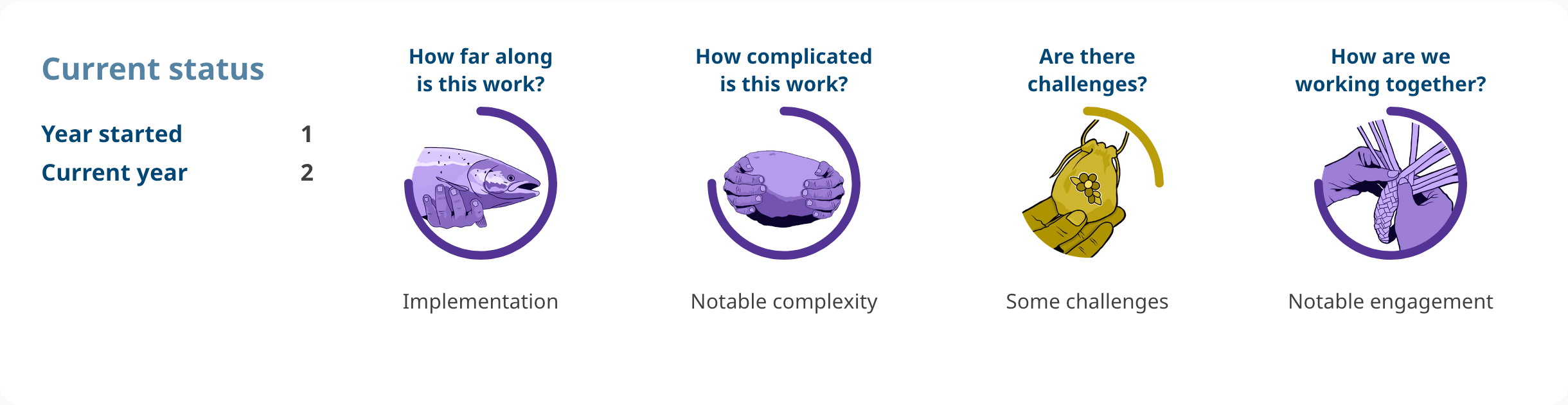
The BC Public Service Agency (BCPSA) provides human resource leadership, expertise, services and programs that contribute to better business performance of ministries. The BCPSA communicates with partners to provide progress updates, review documents and incorporate feedback into Indigenous Crown Relations Essentials level 1 training, as well as for future companion course development.
The BCPSA is the lead for internal partners in the provincial government, including the Crown Agencies and Board Resourcing Office (CABRO). CABRO, co-lead for this action item, is responsible for ensuring public sector organizations have access to this training and will work with them to help provide information on further training and supports as they become available.
The BC Public Service Agency coordinates internal partners to contribute to and develop level 1 training. The BCPSA shares updates about change management and communications planning related to course development and launch with partners to help support implementation of the course across government and in public sector organizations. The Declaration Act Secretariat and the technical lead for the First Nations Leadership Council (FNLC) co-hosted a working group on consultation and co-operation in 2024.
Through this working group, additional information was shared that has informed the Public Service Agency’s increased attention to change management for the mandatory e-course for public service employees. For example, the BCPSA hosted additional engagement sessions with internal groups, ministry human resources partners and senior leaders to prepare the public service for learning, and to support the culture shift that needs to occur for decolonizing the BC Public Service’s systems, processes and people.
The BC Public Service Agency’s corporate House of Indigenous Learning also expanded its cultural safety-related programming –delivering training to 3,500 employees between July 2024 and March 2025, and began planning sessions and supports specific to Indigenous employees.
Are there challenges?
With differing perspectives from internal and external partners on historical events, the ongoing impacts of colonization and legal interpretations of Aboriginal rights and title, there is a risk of not accurately reflecting the diversity of Indigenous Peoples’ experiences in B.C. in course content.
These risks are being mitigated with additional preparatory learning and supports for employees as they gain a deeper understanding of the Province’s foundational commitments to Indigenous Peoples, as well as exposure to concepts and tools such as cultural safety, tokenism, Two-Eyed Seeing, trauma-informed practice, etc. The BCPSA continues to work towards ensuring course content is reflective of differing perspectives.
The learning required to adequately address Action 3.01 is also vast. Companion courses, to be co-developed with partners, will provide BC Public Service employees with opportunities to learn more about and better understand distinctions-based approaches to working with First Nations, Modern Treaty Nations, Métis and Inuit in B.C., including urban Indigenous Peoples.
Given the number of requests for engagement, partner capacity to support continued co-development is a major consideration, though to date, this has not been an obstacle to progress on Indigenous Crown Relations Essentials course development.
The BC Public Service Agency continues to build capacity within its network of learning developers, subject matter experts and facilitators.
Although timelines have shifted, the BCPSA remains committed to ensuring course content reflects the perspectives of partners. The BCPSA will work closely with partners to review, adopt and/or modify suggested revisions in the next round of co-development to ensure the course satisfies partners. The three-level framework previously endorsed by partners will scaffold learning and guide BCPS employees through foundational and skills-based learning opportunities to meet the intended outcomes of this action.
Highlights
In alignment with a distinctions-based approach, the Public Service Agency (PSA) is working with the First Nations Leadership Council (FNLC), Alliance of BC Modern Treaty Nations (the Alliance) historic treaty nations, and Métis Nation BC (MNBC) to develop and deliver a learning framework that addresses the learning needs identified in this action item. These partners provide guidance and feedback on the mandatory Indigenous Crown relations essentials e-course (level 1 of 3) content currently under development.
Co-development of learning with partners is proving successful in two key ways. First, it enables the perspectives of Indigenous Peoples about the history of B.C. to be better integrated. Secondly, the ability to jointly identify learning for BC Public Service (BCPS) employees will improve experiences pf Indigenous Peoples when they interact with the provincial government.
The timelines for launching the courses have been adjusted to accommodate partner engagement so that the work can be more effective and for the opportunity for meaningful partner participation in course development. The final course content will be made available to Crown Agency boards through a Memorandum of Understanding with the Crown Agency and Board Resourcing Office (CABRO).
How are we working together?
In Spring 2023, with primary partner FNLC, the PSA endorsed a three-level training framework for the BCPS to meet learning requirements outlined in action item 3.01. Between February and July 2023, FNLC and PSA co-developed an instructional design plan for level one mandatory training for all BCPS employees, the Indigenous Crown relations essentials e-course. In August and September 2023, the instructional design plan was shared with the Alliance and MNBC to discuss co-development of companion courses (out of scope to action item 3.01) to supplement the mandatory e-course. In Fall 2023, PSA also met with historic treaty nations, urban coalitions, the BC Association of Friendship Centres and Inuit Tapiriit Kanatami to discuss training development to support this action item.
PSA worked with external subject matter experts on content development for Indigenous Crown relations essentials, which was provided to interested partners in March 2024 for input. Once feedback from partners is received and incorporated to all parties’ satisfaction, it is anticipated the pilot activities for this e-course will begin in Spring 2024.
PSA meets and maintains regular email contact with partners to provide progress updates and seek advice on the companion course approach, followed by emails to share resources and receive feedback. Input from partners is integrated into Indigenous Crown relations essentials content development and/or held for future course development.
Engagement with First Nations, Métis and Inuit BCPS employees occurs regularly via an Indigenous employee feedback group formed to support PSA’s three action items and through the Indigenous employee network. All interested internal and external partners will be invited to participate in the course pilot to validate that the course meets the intended learning outcomes. CABRO has sought feedback through interviews of Indigenous members of Crown agency boards to inform the design and delivery of training to all Crown agency boards.
Are there challenges?
Building capacity within the PSA to lead this work has required an investment of time and resources. Dedicating learning developers, subject matter experts and facilitators is key to ensuring the success of remaining course development and delivery. Given the rapid increase in requests for Indigenous engagement, partner capacity to support continued co-development is a major consideration, though to date it has not been an obstacle to progress on Indigenous Crown relations essentials course development.
There is a risk of not accurately reflecting the diversity of Indigenous Peoples’ experiences in B.C. in course content. The learning required to adequately address action item 3.01 is also vast. These challenges are being mitigated by contracting subject matter experts to revise content and through the creation of companion courses, which supplement the mandatory training in the Indigenous Crown relations essentials e-course. Having companion courses will provide BCPS employees with opportunities to learn more about and better understand distinctions-based approaches to working with First Nations, Inuit and Métis in B.C., including urban Indigenous Peoples.
Although timelines have been impacted, steps have been taken to help ensure that course content reflects the perspectives of all partners and that the three-level framework scaffolds learning and guides BCPS employees through foundational and skills-based learning opportunities to meet the intended outcomes of this action item.
Highlights
Work on this action began late in the 2022/23 fiscal year with partner identification and contact occurring in November 2022. In February 2023, a working group comprised of Indigenous partners, the BC Public Service Agency (PSA), and Crown Agencies and Board Resourcing Office met and reviewed existing training for BC Public Service (BCPS) employees and known gaps. Three levels of training will be co-developed to achieve this action item and work has begun on an instructional design proposal for the first level of training.
An Indigenous consultant interviewed Indigenous members of public sector boards and the training recommendations were presented to the working group for initial feedback. Next steps will include co-development of training that is tailored to meet the learning needs of specific roles on public sector boards, with an emphasis on governing in the public interest in a manner that is inclusive of Indigenous rights.
Indicators
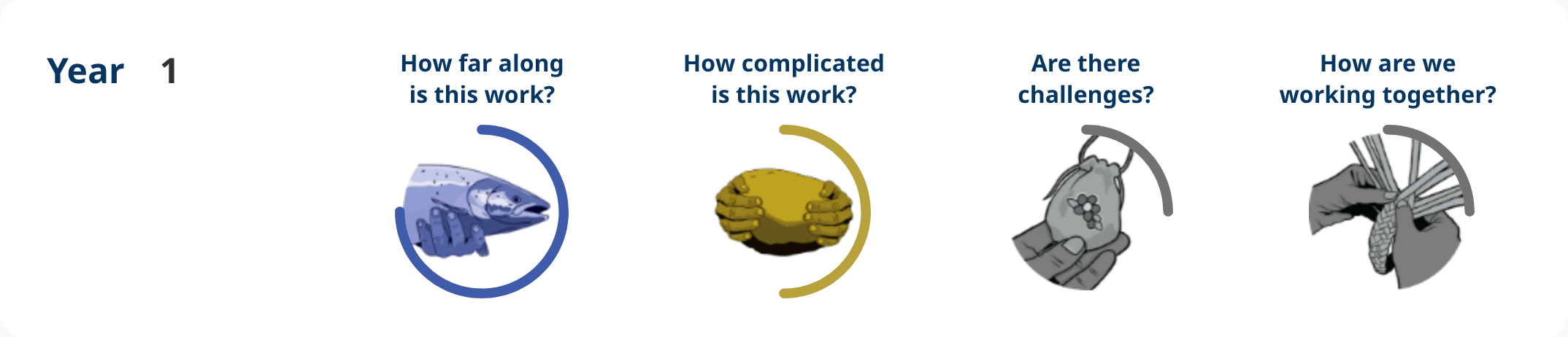
- Implementation project underway: A draft instructional design plan was created and is under revision for Level 1 training, the instructional design proposal was circulated with a working group and engagement will continue in the 2023/24 fiscal year.
- Implementation project underway: A learning needs assessment was completed for the Crown Agencies and Board Resourcing Office to identify training for public sector boards.
How are we working together?
The PSA is collaborating with First Nations organizations on an instructional design proposal for essentials training for approximately 36,000+ BCPS employees. The Ministry of Finance’s Crown Agencies and Board Resourcing Office (CABRO) is working to extend the PSA essentials training to approximately 3000 board members of public sector organizations and will collaborate with the same group of First Nations organizations, as part of the PSA process, as well as Métis Nation British Columbia (MNBC), Urban Indigenous organizations and existing board members on this part of the work.
Are there challenges?
Competing priorities and finite capacity remain ongoing challenges for timely implementation.